Reviewing Bee Happy, Be Happy Quote for Real Embroidery
As a designer who has spent countless hours digitizing patterns and troubleshooting machine quirks, I approach every new machine embroidery design with a critical eye. It is not just about whether the artwork looks cute on a screen; it is about how it translates to thread, fabric, and ultimately, the customer’s hands. Recently, I evaluated the Bee Happy, Be Happy Quote design to determine its viability for real-world projects. This is not a generic product description, but a practical assessment of how this asset performs in a working craft business environment.
First Impressions: Mood and Visual Personality
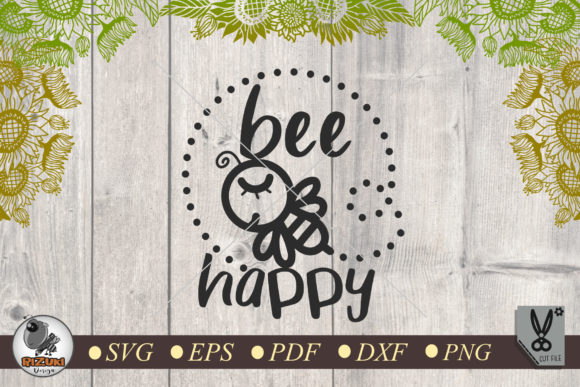
The immediate appeal of Bee Happy, Be Happy Quote lies in its dual-layered charm. The pun is timeless, evoking a sense of warmth and positivity that resonates well with buyers looking for comfort items. Visually, the layout balances typography with illustrative elements, likely featuring bee motifs that complement the text. For an embroidery project, this balance is crucial. If the text is too dense or the bee details too intricate, the design risks becoming a muddy mess of thread. However, from a graphic standpoint, the composition suggests a clean, readable structure that should hold up well when converted into stitches.
The mood is undeniably cheerful, making it a strong candidate for spring collections, nursery decor, or uplifting personalized gifts. When I look at the provided files—specifically the SVG and PNG included in the zip folder—I can gauge the complexity. The vector nature of the SVG allows me to inspect line weights before even loading it into my digitizing software or embroidery machine. This transparency is vital for professionals who need to predict how a design will behave on different materials.
Real-World Application: From Tote Bags to Sweatshirts
To truly test a design, you must imagine it on actual products. I visualized Bee Happy, Be Happy Quote on a canvas tote bag. Here, the design would serve as a central focal point. The quote’s positive message aligns perfectly with the eco-friendly, handmade aesthetic of tote bag users. Using a combination of satin stitch for the text and fill stitch for the bee wings could create nice textural contrast. The key here is ensuring the stitch density is appropriate for canvas, which is heavier than standard cotton.
Another strong application is custom apparel, particularly sweatshirts. Embroidered sweatshirts are a staple for Etsy sellers and small shop owners. Placing this quote on the left chest or as a larger back print requires careful consideration of hoop size. If the design is large, it may require hooping the entire garment or using a magnetic frame to avoid hoop burns on delicate fleece. The readability of the quote is essential here; customers need to read the message from a distance. If the font is too script-heavy or thin, it might get lost in the pile of the fabric.
For baby embroidery, such as onesies or burp cloths, the design offers a sweet, gentle vibe. However, baby skin is sensitive, and garments undergo frequent washing. This brings us to a critical technical point: the backing and stabilizer. A design like this, if not properly stabilized, can pucker the thin knit fabric of a onesie. I would recommend using a soft cut-away stabilizer to ensure the finished product remains comfortable and durable.
Navigating Technical Challenges and Fabric Textures
While Bee Happy, Be Happy Quote is versatile, it is not without its challenges. One must be cautious when applying it to textured fabrics like terry cloth towels or waffle-weave aprons. The texture can interfere with the clarity of small details, such as the antennae of the bee or the serifs of the letters. In these cases, simplifying the design or increasing the stitch count slightly might help the elements stand out against the rough surface.
Dark fabrics present another hurdle. If you are stitching white or yellow thread on navy blue or black fabric, you must ensure there is enough contrast. Sometimes, a underlay stitch in a contrasting color can help pop the top threads. Additionally, curved surfaces like caps require special attention. The curvature can distort the text, making "Bee Happy" look arched or stretched. Testing on a scrap piece of similar fabric is non-negotiable here. You need to verify that the design sits flat and does not pull the fabric out of shape.
Stitch density is another factor to monitor. If the bee elements are heavily filled, they can become stiff and heavy. For a lightweight garment like a t-shirt, this stiffness is undesirable. Adjusting the fill pattern to a lighter density or using a running stitch for outlines can maintain the visual integrity while keeping the hand of the fabric soft.
Commercial Viability and Brand Consistency
For craft business owners and Etsy sellers, the value of a design extends beyond aesthetics. It is about brand consistency and customer trust. Bee Happy, Be Happy Quote fits well into niches focused on mindfulness, nature, and positivity. Using this design in your product lineup can help reinforce a brand identity that is warm and approachable. High-quality embroidery signals professionalism. Sloppy stitching, puckering, or thread breaks can damage a seller’s reputation, so mastering the technical execution of this design is paramount.
The inclusion of multiple file formats in the purchase—PNG, PDF, SVG, DXF, and EPS—adds significant value for digital product sellers. While the primary focus here is embroidery, having the SVG and EPS files allows for creating printable mockups or complementary digital assets. This versatility means you can market the same design across different platforms, perhaps offering both a physical embroidered patch and a digital printable for planners or wall art. This cross-promotion can increase buyer engagement and overall sales.
Practical Notes for the Embroidery Designer
Before launching this design into your production line, consider these practical steps:
- Test on Scrap Fabric: Always run a test stitch-out on the exact fabric type you intend to use. This reveals issues with tension, density, and registration.
- Check Thread Contrast: Ensure your thread colors stand out against the fabric. Use a color wheel to select complementary or high-contrast combinations.
- Verify Hoop Size: Confirm that the design dimensions fit within your machine’s maximum hoop size. If it is close to the limit, consider resizing or repositioning.
- Inspect Small Details: Zoom in on the bee’s features. Are there tiny elements that might break or get lost? Simplify if necessary.
- Use Proper Stabilizer: Match the stabilizer to the fabric. Cut-away for knits, tear-away for wovens, and water-soluble for delicate or pile fabrics.
- Confirm Licensing: Review the terms provided with the download. Ensure you have the right to use the design for commercial purposes if you plan to sell finished items.
In conclusion, Bee Happy, Be Happy Quote is a promising asset for designers and makers. Its strength lies in its emotional resonance and versatile application. However, its success depends entirely on the executor’s attention to detail. By understanding the interplay between stitch density, fabric texture, and design layout, you can transform this digital file into a high-quality handmade product that delights customers and strengthens your brand. Whether you are creating a holiday gift, a boutique product, or a custom apparel line, this design offers a solid foundation for creative expression in the world of Crafts and Graphics.